Training Overview: Scholarship
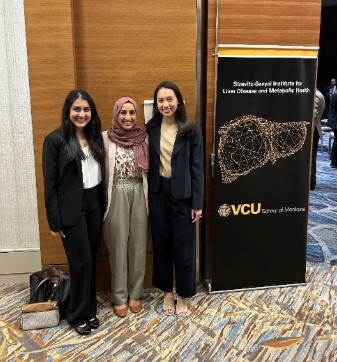 Our residents are encouraged take seriously their commitment of contributions to the science and science of education in medicine. We recognize that all residents enter with different experience with research – our program takes provide in ensuring that all of residents have the necessary knowledge, skills, and resources to engage in research and scholarship during residency and beyond. During intern year, all interns participate in a scholarship seminar in fundamental skills including but not limited to – developing clinical questions, performing literature searches, scholarly writing, and finding mentors. At the start of second year, all residents participates in a formal course designed to introduce them to key concepts in and resources for research. Each resident designs a study, identifies a mentor, and is allowed 1-2 rotations for research activities. Residents are encouraged to contribute in ways that are meaningful to them as individuals, which may mean clinical, translational or basic science research projects, but may also mean curriculum development, review papers, medical education research, essay writing and more.
A resident scholarship fund is available to support residents in presenting their work regionally, nationally and internationally. See accomplishments for a list of recent presentations.


Accomplishments
We pride ourselves on identifying opportunities for research early in a resident’s career.
Research for Resident Course
The series is conducted as a modified team-based learning (TBL) course and is integrated into the existing conference time during July and August for PGY2 residents. Each class begins with a mini lecture on a topic, followed by group work focused on developing each trainee’s Capstone Project.
Requirements:
- Textbook: Designing Clinical Research, 4th Edition, by Stephen Hulley, Steven Cummings, Warren Browner, Debroah Grady, Thomas Newman (purchased by residency/fellowship program or attendee)
- Completion of CITI training (basic plus 1 additional module)
- A final Capstone Project
Topics Covered:
- Choosing a Topic and Literature Search Strategies
- Framing a Research Question
- Study Design
- Biostatistics
- Research Integrity
- The Institutional Review Board Process
- Biomedical Informatics Resources
- Managing Large Datasets
- Survey Design
Clinician Scientist Curriculum
The Clinician Scientist Curriculum is offered to residents interested in pursuing a career as a clinician scientist. This curriculum expands upon the categorical research and scholarship curriculum that is required for all residents. Those interested in clinician scientist curriculum are identified by the first half of PGY1.
Mentorship
Each trainee in the clinician scientist curriculum will be assigned a faculty advisor. The advisor will assist the trainee to connect with a mentor who will take responsibility to guide the trainee’s research endeavors. The advisor will continue to track the trainee throughout training to help them overcome any obstacles that arise.
Curriculum
Clinician scientist residents will participate in the current research curriculum for all residents during the summer of PGY2. However, an optional spring semester asynchronous course in Team Science: Theories and Practice (CCTR640) is encouraged for those whose research interests are relevant to the course material.
Protected research time
Research track residents will be required to devote eight two-week elective blocks to research, during which they will continue their continuity clinic. An additional two-week research block is optional.